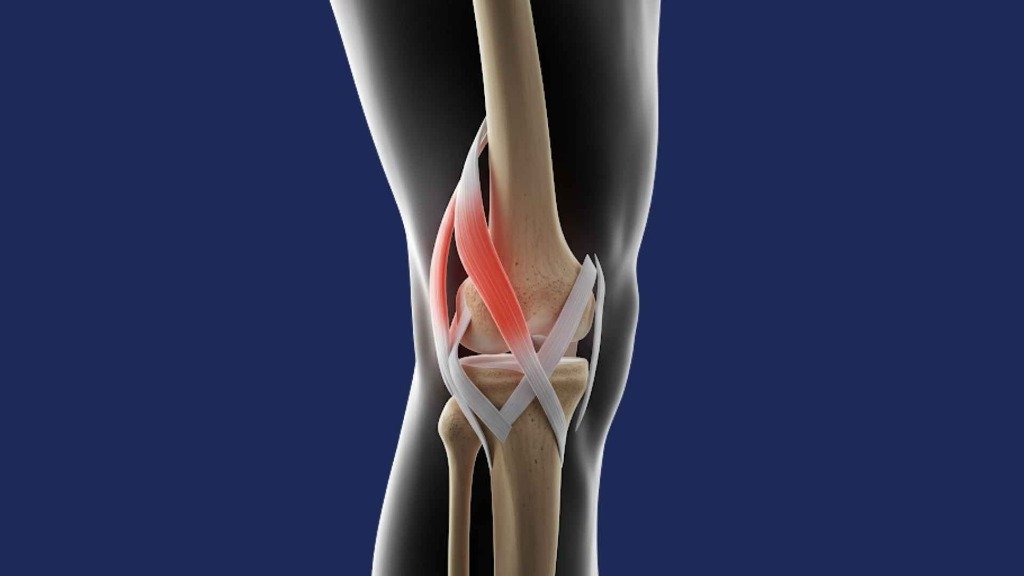
A torn ACL (anterior cruciate ligament) causes knee instability, inability to pivot or cut, and progressive damage to the meniscus and cartilage if left untreated. Assoc. Prof. Dr. Murat Aydın performs anatomic ACL reconstruction arthroscopically using a four-strand hamstring tendon autograft — the technique with the best long-term stability and lowest donor site morbidity.
1. What Is ACL Reconstruction?
The anterior cruciate ligament (ACL) is the primary stabiliser of the knee, preventing the tibia sliding forward under the femur and controlling rotational stability. When it ruptures — typically during a pivot or landing from a jump — the knee becomes unstable and secondary injuries to the meniscus and cartilage follow rapidly.
ACL reconstruction replaces the torn ligament with a tendon graft that integrates biologically into the bone tunnels over 6–9 months (a process called ligamentisation).
2. Symptoms of ACL Tear
- An audible 'pop' at the moment of injury
- Rapid knee swelling within 2–6 hours (haemarthrosis)
- Knee giving way or feeling unstable when turning or pivoting
- Positive Lachman and pivot shift tests on clinical examination
- MRI confirms the diagnosis and identifies associated meniscus or cartilage injuries
3. Non-Surgical vs. Surgical Management
Non-surgical management (physiotherapy and bracing) is considered for:
- Low-demand elderly patients not participating in pivoting sports
- Partial ACL tears with preserved rotational stability
Surgical reconstruction is recommended for:
- Active individuals wishing to return to sport
- Any patient with a complete tear and knee giving way episodes
- Associated meniscus tears requiring repair (repair heals better with concurrent ACL stabilisation)
4. The Operation
Duration: 60–90 minutes | Hospital stay: 1–2 nights
- Hamstring harvest: Gracilis and semitendinosus tendons harvested through a 3cm incision below the knee and tripled/quadrupled into a 4-strand graft.
- Joint inspection: Full arthroscopic survey — meniscus tears repaired at the same time.
- Bone tunnels: Anatomic femoral and tibial tunnels drilled arthroscopically at the native ACL footprint.
- Graft passage and fixation: Graft passed through tunnels and fixed with titanium suspensory buttons (femur) and bioabsorbable interference screws (tibia).
5. Recovery & Return to Sport
- Days 0–14: Crutches, cold therapy, knee elevation. Straight leg raises and quad sets from day 1.
- Weeks 2–6: Progressive weight bearing, cycling on a stationary bike from week 4.
- Weeks 6–12: Swimming, straight-line jogging begins at 10–12 weeks.
- Months 4–6: Agility and sport-specific training. Isokinetic strength testing at 6 months.
- Months 6–9: Return to full contact sport (football, rugby) after passing strength symmetry criteria (>90% limb symmetry index).
6. UK vs. Turkey
NHS / UK Private
- NHS wait: 6–12 months
- Private: £7,000–£12,000
Turkey (Dr. Aydın)
- Treatment within 2–3 weeks
- Significant cost savings
7. Success Rate
94–97% excellent functional outcome with anatomic ACL reconstruction using hamstring autograft.
Graft rupture rate is 3–6% in active athletes returning to high-level pivoting sports. The re-injury risk is significantly reduced by following the structured return-to-sport protocol and achieving full strength symmetry before competition.
Frequently Asked Questions
Can I fly after ACL reconstruction?
How long does ACL surgery take?
When can I return to football or rugby?
Is a hamstring graft better than a patellar tendon graft?
Get Your Free Assessment for ACL Reconstruction Surgery in Turkey
Send your MRI or X-ray via WhatsApp and receive a personalised treatment plan and all-inclusive quote from our English-speaking team within 24 hours.
Also see: Turkish version of this guide | All treatment guides | Why choose Turkey?